The Art of Woven Silver: Unveiling the Mastery of Rigato Engraving
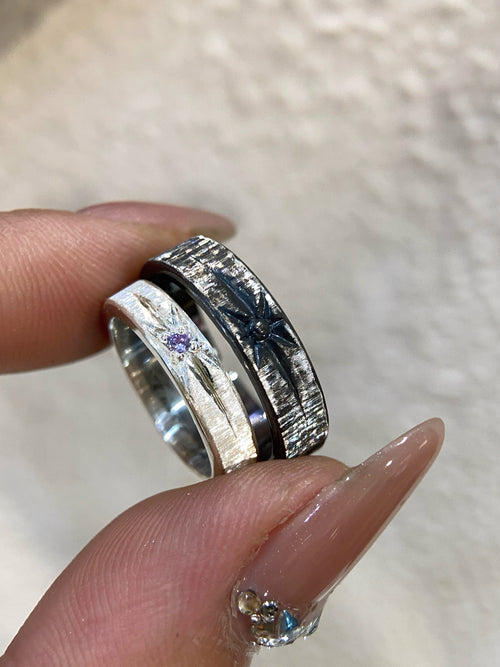
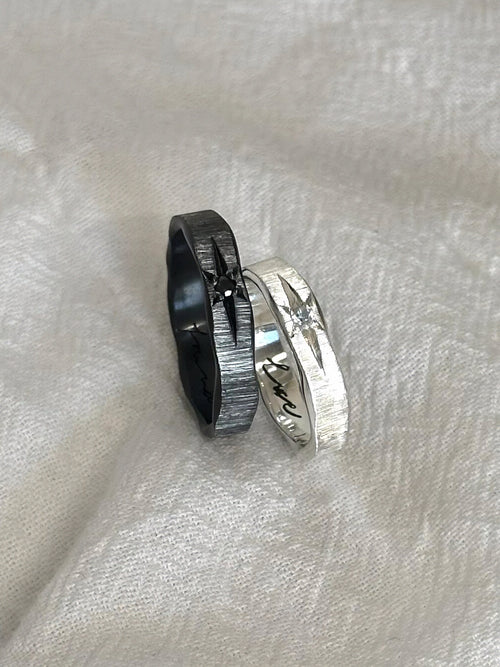
In the world of high jewelry, sterling silver is not merely a precious metal—it is a canvas. While a mirror-like, high-polish finish has its own classic charm, there is a legendary, textile-like texture that transforms silver into a haute couture masterpiece. Today, we take you on a journey to discover the mesmerizing world of Rigato , a rare artisanal technique that bridges the gap between raw precious metal and luxurious silk.
The Historical Origins: From Renaissance Workshops to Florentine Masterpieces
The Rigato technique is far from a modern production method; it is a living heritage tracing back deep into the Italian Renaissance. During this era, master silversmiths in cultural capitals like Florence and Venice sought ways to subdue the harsh, blinding glare of polished precious metals. Their goal was to capture a soft, diffused glow that mimicked the opulent silks and satins worn by European royalty.
Over the centuries, this meticulous method of hand-engraving parallel lines evolved into one of the ultimate pillars of fine jewelry, revered for giving sterling silver an organic, velvety, and deeply sophisticated soul.
The Master’s Guild: Where the Secret of Rigato Lives
To understand the soul of this craft, one must look at where our master artisans acquired their skill. This is not a technique that can be replicated by modern machines or learned from a textbook.
Our master craftsmen spent years under a strict, traditional apprenticeship in Valenza, Italy—the undisputed heartland of global high jewelry craftsmanship. Passing down secrets through generations, Italian masters taught our artisans how to "feel" the silver with their hands, ensuring that every microscopic line of the Rigato texture is engraved with absolute precision, infinite patience, and a deep respect for historical legacy.
The Tools and the Treacherous Toll of Precision

True, artisan-level Rigato engraving on sterling silver is a grueling, entirely manual process that demands extraordinary investment. It requires specialized, ultra-fine diamond-tipped gravers and custom-made Florentine bulino tools imported directly from Europe. These instruments are incredibly expensive, requiring frequent replacement or meticulous, manual re-sharpening by the artisans themselves to maintain their razor-sharp edge against the metal.
However, the true cost of this process lies in the immense material loss (high silver loss).
As the artisan cuts thousands of microscopic, perfectly parallel lines into the silver surface one by one, fine silver dust is continuously shaved away. Because the carving must be deep enough to catch the light beautifully but shallow enough not to compromise the structural integrity of the jewelry, a significant percentage of the precious metal is lost as unrecoverable micro-dust. It is a luxurious sacrifice made solely for the sake of unparalleled aesthetics.
A Nod to the Pinnacle: Stile Buccellati and Texturizing Silver
You cannot speak of the Rigato technique without paying homage to the absolute masters of this domain. This exquisite texture shares a profound creative lineage with the legendary Italian Texture Engraving , a heritage epitomized by the world-renowned High Jewelry House, Buccellati .
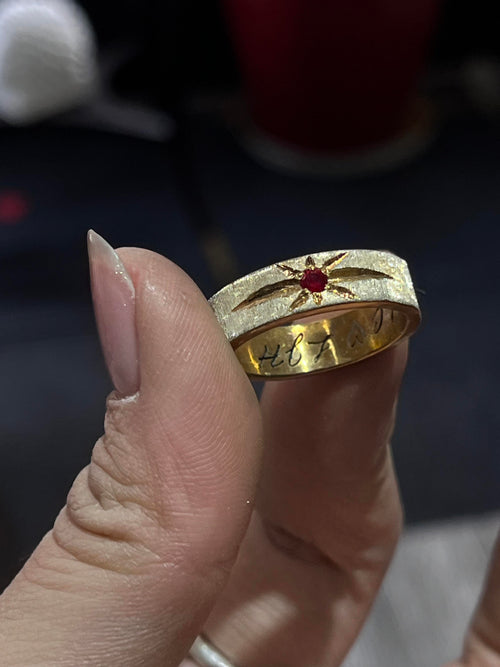
Buccellati elevated this craft to an international art form known as Stile Buccellati, where Rigato stands as their most iconic signature—creating parallel lines that look identical to fine silk fabric, a technique they masterfully applied to both gold and precious silver masterpieces.
Our jewelry embodies this very same spirit. By manipulating light and shadow through thousands of hand-carved micro-grooves, our sterling silver pieces achieve that exact, coveted "soft-focus" elegance—making silver look and feel as supple as a piece of woven silk wrapped around your skin.
Why Choose Rigato Sterling Silver Jewelry?
When you run your fingers across a Rigato piece, you are not just touching silver; you are touching hours of silent concentration, expensive precision tools, and a historic Italian legacy. It is a texture designed for true connoisseurs of understated luxury—jewelry that doesn't shout for attention, but commands it with a refined, lunar glow the moment it catches the light.